CML, Organ Music and Cherry Blossoms in Trondheim: Report from the NCMLSG Symposium, 23–24 April 2026
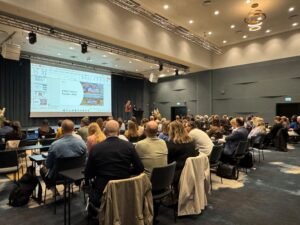
In late April, the Nordic CML Study Group (NCMLSG) gathered for a two-day meeting on the banks of the River Nidelva in Trondheim. After several days of spring weather, we were welcomed by blooming cherry trees, sunshine, rain, and even snow in this historic and charming university city.
On the first day, Stina Söderlund and Christen Lykkegaard hosted a well-attended “CML School” for physicians, nurses, and industry representatives. Topics included first-line TKI treatment (Perttu Koskenvesa), second-line TKI therapy and treatment failure (Stina Söderlund), treatment discontinuation (Johan Richter), pregnancy (Lovisa Wennström), and allogeneic stem cell transplantation (Tobias Gedde-Dahl) and case-based discussions.
In parallel, the Nordic CML Group held its annual meeting, featuring presentations from preclinical collaborators and discussions of ongoing studies as well as the novel TKIs TERN-701 and ELVN-001, for which phase III studies are expected to open for enrollment in 2027. All Nordic countries are planning to participate in at least one of these studies.
Javiera Reyes Lück, from Hong Qian’s laboratory, presented the latest data on the importance of the bone marrow niche and CXCL14, which is downregulated in blast-phase CML, as previously demonstrated by the group (PMID: 37018663). Samples from three patients with blast-phase CML were transplanted into NSG-SGM3 mice and treated with ponatinib alone, CXCL14 alone, or the combination. In these experiments, the combination treatment showed a markedly superior effect on leukemia progression.
Key Questions in Chronic-Phase CML Today
What are the most important clinical questions in chronic-phase CML today, when most patients can expect a normal life expectancy and some may even discontinue treatment? During an interactive session, several key areas were identified:
- Quality of life and TKI-related adverse effects, which could be assessed more systematically. Education regarding TKI switching is needed to ensure equitable care within the relatively decentralized CML healthcare system.
- TKI dosing in clinical practice: how low can the dose safely be reduced?
- Identification of biomarkers to predict response and individualize TKI selection.
- How high-risk criteria in chronic-phase disease should be implemented now that the accelerated phase category is no longer used.
In the evening, Henrik Hjorth-Hansen had arranged an exclusive guided tour of Nidaros Cathedral. The cathedral, the largest in the Nordic countries, impressed with its Gothic architecture and beautiful lighting. We learned about its historical significance and were then treated to Bach’s Toccata and Fugue performed on the cathedral’s famous organ, an unforgettable experience.
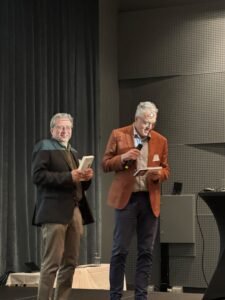
During the conference dinner, Henrik Hjorth-Hansen was honored after 16 years as Chair of NCMLSG. Henrik has truly created a unique environment within the group: open, inclusive, and characterized by close collaboration between clinicians and preclinical researchers. He has played a leading role in numerous studies conducted by the group in partnership with industry, most recently the BosuPeg study (see below).
Advanced Disease and Blast Crisis
On Friday, the symposium continued with a session dedicated to advanced disease and blast crisis.
Professor Philippe Rousselot from Versailles presented an overview of recent developments in Ph+ ALL and the distinction between multilineage and lymphoid-restricted disease, highlighting potential future collaborations with the ALL study group. He also presented results from the French PonAza study, in which patients with myeloid blast crisis were treated with ponatinib plus azacitidine. Survival outcomes were at least comparable to retrospective registry data and results from the MATCHPOINT study (FLAG-IDA plus ponatinib). Nevertheless, allogeneic stem cell transplantation remains the most important and only potentially curative treatment in this patient population.
Fiona Fernandez from Hammersmith Hospital, London, presented her research on quality of life in CML patients, with a focus on fatigue, a TKI-related side effect often underestimated by treating physicians according to patient surveys. Through extensive sleep monitoring, she has demonstrated that TKI treatment significantly alters sleep quality, resulting in lighter but not shorter sleep compared with controls. Together with other factors, such as inflammation, these sleep disturbances are believed to contribute to fatigue.
The BosuPeg Study
Henrik also presented the BosuPeg study, a Nordic randomized phase II trial in which many of us have enrolled patients. Newly diagnosed CML patients were treated with bosutinib and, if treatment was tolerated, randomized after three months to either continue bosutinib alone or receive bosutinib plus low-dose ropeginterferon alfa-2b for 18 months.
A total of 163 patients were enrolled, of whom 118 underwent randomization. The combination therapy demonstrated a trend toward deeper molecular responses, particularly MR4.5, although the primary endpoint of MR4 at 12 months was not statistically superior to bosutinib monotherapy. A practical lesson learned was that gradual dose escalation of bosutinib may reduce gastrointestinal toxicity, whereas hepatotoxicity remains a significant limitation.
Follow-up within the study is ongoing, and several patients are now expected to discontinue treatment according to protocol. Multiple laboratory-based studies are linked to the trial, and we look forward to future updates.
TKI Discontinuation
TKI discontinuation was another important topic of discussion. Daniela Zackova from Brno presented the Czech HALF study, which enrolled 207 patients with chronic-phase CML who had received TKI therapy for more than four years and maintained a stable MR4.0 response for at least two years.
Rather than abrupt discontinuation, a two-step dose-reduction strategy was investigated: first, 50% of the standard dose for six months, followed by the same reduced dose administered every other day for an additional six months before complete discontinuation.
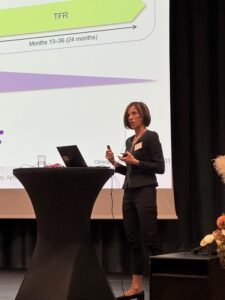
The treatment-free remission (TFR) rate after 15 months was 70.4%, which is comparatively high. However, early relapses with loss of major molecular response (MMR) were observed, as seen in other discontinuation studies, and longer-term results are awaited.
The group also investigated patients who were invited to participate but declined enrollment (22%) through the Anti-HALF survey, thereby addressing an important issue in routine clinical practice. Patients reported feeling well informed (93%), but the most common reasons for declining participation were fear of relapse (62%), concerns about reduced efficacy upon TKI re-initiation (55%), and logistical challenges (35%). Compared with participants in the HALF trial, those who chose not to discontinue TKI therapy differed significantly with respect to sex, age, educational level, and distance from the hospital (PMID: 38472478).
Translational Research and New Therapeutic Strategies
Two studies from Göran Karlsson’s laboratory in Lund were presented.
Alex Antill focused on predictive response markers in chronic-phase CML, demonstrating that a higher proportion of residual BCR::ABL1-negative CD26⁻CD35⁺ stem cells is associated with favorable treatment response and successful TKI discontinuation.
Ram Krishna Thakur presented an impressive overview of a newly developed CML-specific single-cell meta-atlas. The platform integrates published single-cell datasets from CML patients, including multi-omics and flow cytometry data, into a shared interactive tool for mapping and characterizing distinct cellular subpopulations. The project has the potential to streamline research efforts while conserving both resources and valuable patient samples. Ram and Göran recently published a review on this topic (PMID: 41105914).
Mårten Isaksen from Bergen presented the VITAL study, a collaboration between Bjørn Tore Gjertsen’s laboratory and Mendus. Patients with CML and stable BCR::ABL1 responses between 0.1% and 10% while receiving the same TKI for the previous two years are eligible for this phase I study. Participants receive six intradermal injections of vididencel, an allogeneic dendritic cell vaccine. By stimulating T-lymphocyte activity, the goal is to reduce measurable residual disease (MRD) and ultimately increase the proportion of patients who can achieve successful TKI discontinuation. Enrollment is ongoing.
Looking Ahead
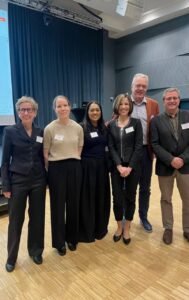
In summary, this was a highly successful meeting featuring outstanding speakers, excellent discussions, and ample opportunities for networking with colleagues and invited guests. Our sincere thanks go to Henrik Hjorth-Hansen, the speakers, everyone who travelled to Trondheim, and our industry partners for making the meeting possible.
NCMLSG is planning its next in-person group meeting, open to all interested participants, during week 11 of 2027 at Arlanda Airport, Sweden. The next symposium will be organized by our Danish colleagues around week 11 of 2028.
Colleagues interested in CML are welcome to register via the group’s new website, www.ncmlsg.org, to receive meeting invitations and updates.
The NCMLSG Steering Committee now consists of Anna Lübking (Chair, Sweden), Stina Söderlund (Secretary, Sweden), Henrik Hjorth-Hansen (Treasurer, Norway), Waleed Majeed (Norway), Andreja Dimitrievic (Denmark), Perttu Koskenvesa and Siim Kalter (Finland), and Bjørn Tore Gjertsen (Bergen) as an affiliated representative for preclinical research.